
 About Us
 Contact Us
 020 8892 3813



 Free Delivery Over £99*
 1 Hour Delivery Window*
 Earn Loyalty Points
 Red Hot Deals
 Gift Ideas
 Our Reviews
The dust in your workshop is more dangerous than you think
The hidden health risk every woodworker needs to know about
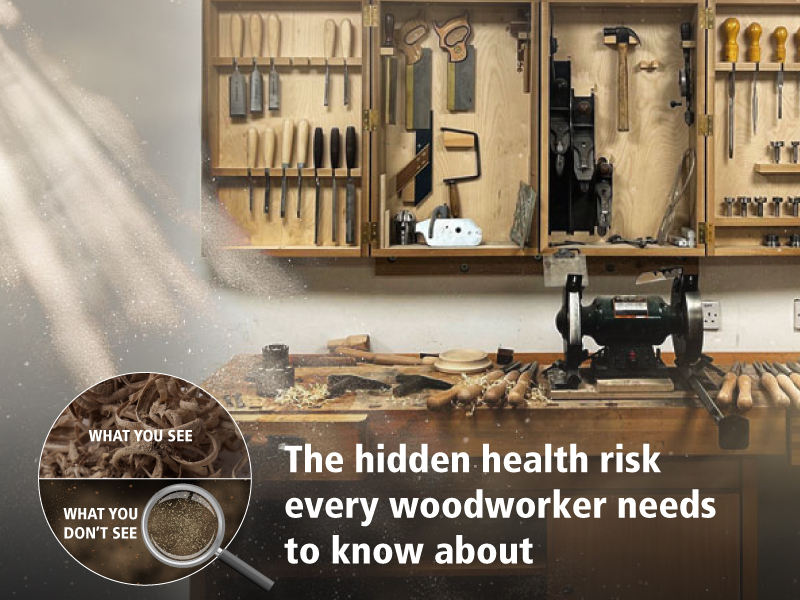
Most woodworkers know that dust is a nuisance. Fewer realise it is a classified health hazard - and that the most dangerous particles are completely invisible to the naked eye.
Wood dust - especially fine dust from sanding, routing, and turning - can stay airborne for hours after tools are put down. Over time, repeated exposure has been linked to chronic respiratory conditions and, in the case of hardwood dust, nasal and sinus cancers. The IARC (International Agency for Research on Cancer) classifies wood dust as a Group 1 carcinogen - meaning there is sufficient evidence that it can cause cancer in humans.
If you can see dust settling in your workshop, there is almost certainly far more that you cannot - and that unseen fraction is what poses the real long-term risk.
|
The key insight: Particles in the PM2.5 range - below 2.5 microns - are identified by the World Health Organization, US EPA, and UK government agencies as the fraction posing the greatest long-term risk to health. They are too small to see, bypass your body's natural defenses, and can remain suspended in workshop air for hours after work stops. Visible dust tells you very little about the dust that actually matters. |
It is worth understanding the real picture before choosing any dust control equipment. That is exactly what this series of short articles is designed to help you do.
→ Read the full article: The Dangers of Wood Dust for Woodworkers
 My Account
 About Us
 Find Us
 MON - SAT 08:30 - 17:30
 020 8892 3813