
 About Us
 Contact Us
 020 8892 3813



 Free Delivery Over £99*
 1 Hour Delivery Window*
 Earn Loyalty Points
 Red Hot Deals
 Gift Ideas
 Our Reviews
HVLP vs HPLV: two letters swapped, two very different machines
The acronym mix-up that could affect your lung health
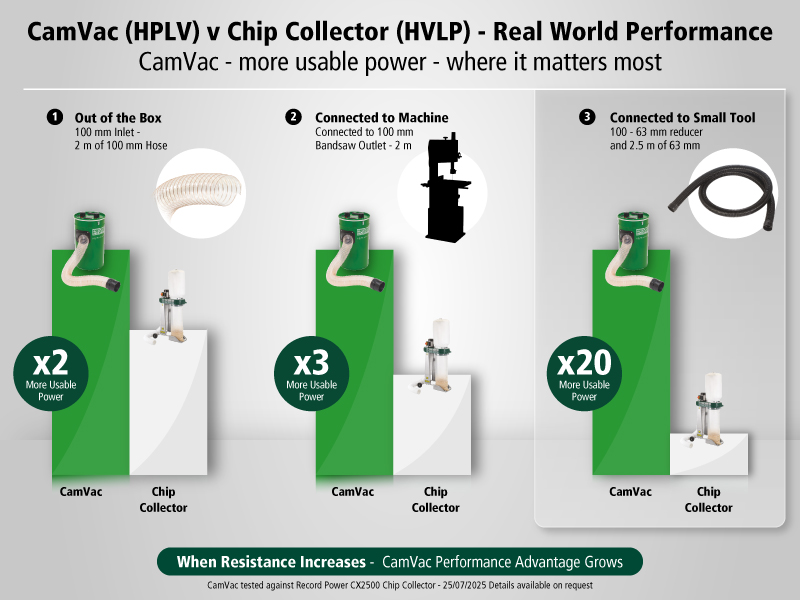
HVLP and HPLV look almost identical on paper. In practice they describe machines with completely different strengths - and confusing them is one of the most common and costly mistakes in workshop dust control.
HVLP (High Volume, Low Pressure) is the traditional chip collector. It moves large volumes of air and is effective at clearing chips from planers and jointers. But low static pressure means it loses effectiveness quickly when faced with fine filters, long hose runs, or small tool ports. Bag filters on these systems typically stop at 15 to 30 microns - offering no meaningful protection in the PM2.5 range.
HPLV (High Pressure, Low Volume) works differently. It moves less raw air but pulls hard - maintaining effective suction through fine filters, narrow hoses, and long duct runs. This is the technology that can genuinely capture fine, lung-damaging dust.
|
The key insight: A chip collector with a bag filter looks like dust extraction. For the most dangerous particles - those in the PM2.5 range that you cannot see - it provides very little (if any) protection. If fine dust and long-term health are the priority, pressure matters as much as volume. It is not about which machine is louder or larger - it is about which type of system can sustain suction through the fine filter the job actually requires. |
The article covers when each system makes sense, what to look for, and why the comparison matters far more than headline wattage figures.
→ Read the full article: HVLP or HPLV - What Are the Differences and Why Do They Matter?
 My Account
 About Us
 Find Us
 MON - SAT 08:30 - 17:30
 020 8892 3813