 About Us
 Contact Us
 020 8892 3813



 Free Delivery Over £99*
 1 Hour Delivery Window*
 Earn Loyalty Points
 Red Hot Deals
 Gift Ideas
 Our Reviews
How to actually choose the right dust extractor for your workshop
A practical buyer's guide - without the jargon or the sales spin
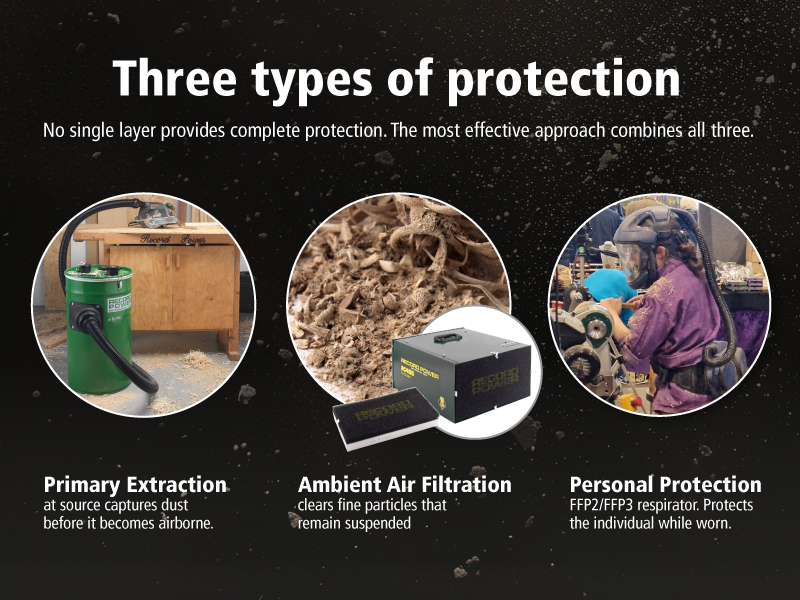
After five emails covering the science and the common pitfalls, this one brings it all together. The buyer's guide maps out the three layers of effective dust control and helps you understand which combination fits your workshop.
The three layers are: primary extraction (removing dust at the source before it becomes airborne), ambient air filtration (cleaning the air that remains suspended), and personal protective equipment (protecting you directly). All three have a role - but they are not interchangeable, and none replaces the others.
|
The key insight: The most common mistake is spending money on a chip collector and assuming the dust problem is solved. Chip collectors are effective at what they are designed for - moving high volumes of chips. But for the fine, invisible particles in the PM2.5 range that cause long-term damage, you need a primary extractor rated for efficiency in that range. Ambient filters and masks are valuable additions to a layered strategy. They should not be the first - or only - line of defence. |
The guide also covers the most common purchasing pitfalls - from trusting raw airflow figures to assuming a large machine must be more effective - and includes a practical summary table matching workshop type to the most appropriate solution.
 My Account
 About Us
 Find Us
 MON - SAT 08:30 - 17:30
 020 8892 3813